
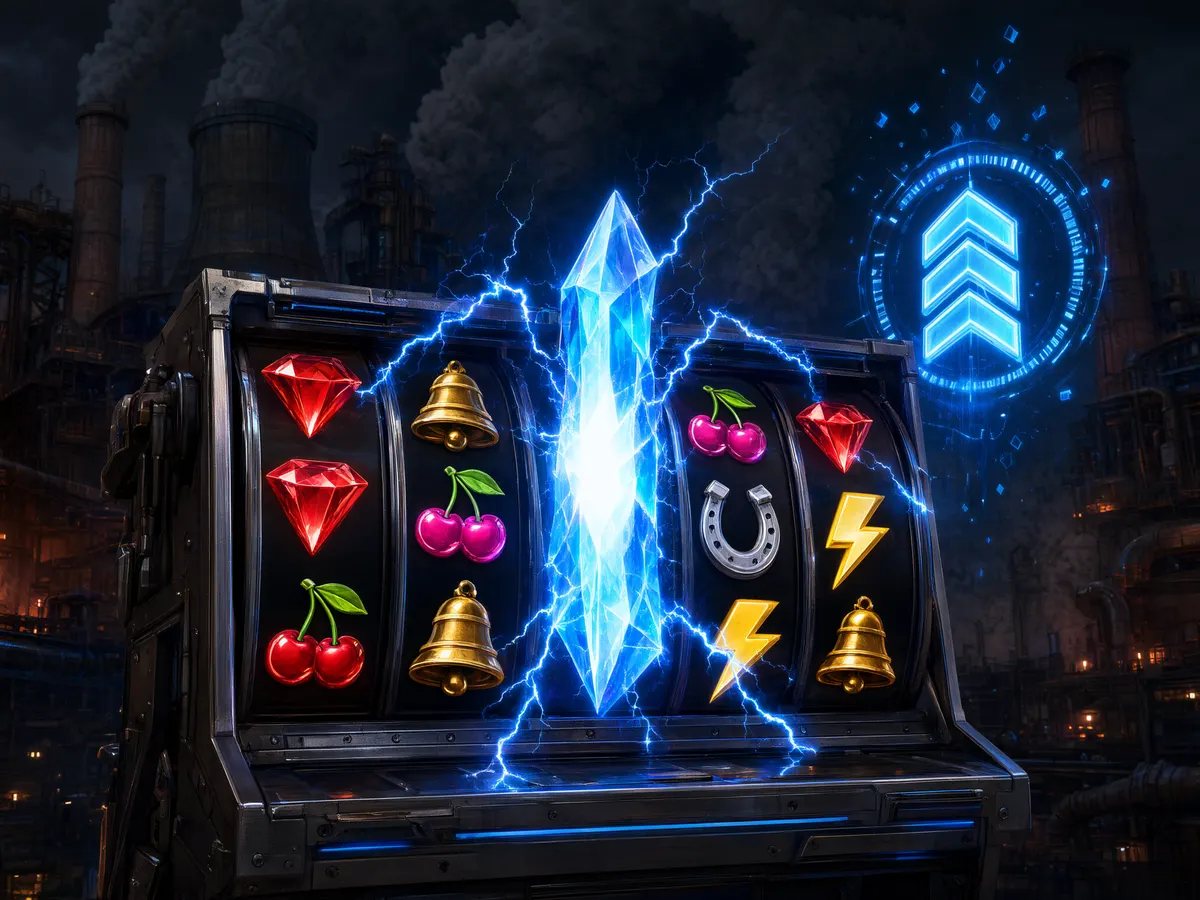
You open a casino lobby, and there it is in the “new games” row: a tile you have never seen, crackling with blue light. You tap it, spin a few times, and a wild symbol stretches up the reel while a little number next to it ticks from ×2 to ×3. Nice. But what did you actually just watch happen, and does it change anything about your odds?
That is the useful question to ask about the CloudForge slot expanding wilds mechanic. Relax Gaming has launched CloudForge as a deliberately simple game for casual players, and the studio put the expanding wild front and centre of the pitch. Below is what the release actually contains, how the mechanic functions on the reels, and the checks worth running in the first two minutes of play before you decide whether the game suits you.
What Relax Gaming actually shipped
CloudForge is a new online slot release from Relax Gaming, the Malta-based studio best known to most players for the Money Train series. The design brief, by the provider’s own description, was straightforward gameplay with momentum: frequent wins paired with mechanics that do not need a manual.
Two features carry the game:
- Expanding Wilds — present as a core part of every spin. They grow upwards on the reel and their multiplier value increases as they develop.
- Electric Reels — a random trigger that injects sudden bursts of intensity into the base game.
Louis Manché, game product owner at Relax Gaming, framed the choice plainly, noting that expanding wilds are “a mechanic that players continue to gravitate towards.” That is an honest read of the market. Expanding wilds have been a staple since the earliest Book-style slots, and players recognise them instantly, which matters when a studio is targeting casual traffic rather than bonus-buy hunters.
Note what the launch messaging does not lead with: there are no headline RTP, volatility or max-win figures in the announcement. That is normal for a press release, and it is exactly why the next section matters.
How the CloudForge slot expanding wilds mechanic works
Strip away the lightning effects and an expanding wild does three things in sequence.
- It lands as a wild. A wild substitutes for regular paying symbols, so it can complete combinations it is not itself part of.
- It expands. Instead of occupying a single reel position, it grows to cover more positions, in CloudForge upwards along the reel. More covered positions means more ways that one symbol can complete a win line or cluster.
- It carries a multiplier that grows as it expands. Any win the wild contributes to is multiplied by that value. A wild that has climbed further is worth more than one that has only just started.
So the mechanic bundles two separate upsides into one symbol: coverage and multiplication. That is why it feels generous on screen even when the cash result is modest. A two-position wild at ×2 on a small line win is still a small win.
It helps to see where this sits against the other wild types you will meet in modern slots:
| Wild type | What it does | Typical effect on play |
|---|---|---|
| Standard wild | Substitutes on one reel position | Small, frequent nudge to hit frequency |
| Expanding wild | Grows to cover extra positions on its reel | Bigger single-spin swings; more lines completed at once |
| Multiplier wild | Substitutes and multiplies the win | Amplifies wins it joins, coverage unchanged |
| Expanding wild with growing multiplier (CloudForge) | Covers more positions and raises the multiplier as it grows | Coverage and amplification stack on the same symbol |
| Sticky wild | Holds position across subsequent spins or respins | Builds value over a feature rather than one spin |
Electric Reels sit in a different category. It is a random modifier, meaning it is not earned by landing scatters or filling a meter — the RNG decides when it fires. Random modifiers exist to break up dead stretches in the base game, and they are funded out of the same return budget as everything else.
The part most reviews skip: a flashy wild does not mean a better return
This is where a clear head pays off. RTP is the long-run share of total wagers a game returns, averaged over millions of rounds — 96% RTP corresponds to a 4% house edge. That number is set by the whole math model, not by how exciting one feature looks.
If a studio spends more of the return budget on expanding wilds and random reel events, it has to take that money from somewhere else, usually thinner base-game symbol pays. Nothing is free. The mechanic changes the shape of your results, not the direction of the edge. Over time the house keeps its percentage, in CloudForge exactly as in a plain three-reel classic.
Volatility is the shape word. High volatility means rarer but larger wins and swingier sessions; low volatility means more frequent, smaller wins and a steadier balance. Volatility does not change RTP. Relax Gaming’s “frequent wins, keep the action moving” positioning points at the lower-variance, casual end of the scale, but positioning is marketing — the in-game information panel is the record.
Five checks to run before your first real-money spin
- Open the info panel and look for the RTP. Disclosure rules vary by jurisdiction and regulator, so not every licensed operator is required to display RTP for every slot, and you may need to dig through the game rules or the supplier’s own page. Also check whether the game ships in multiple RTP versions, which several suppliers do — the same title can sit at a noticeably lower return at one casino than another.
- Read the volatility rating and the max win. A stated volatility band plus a maximum win multiplier tells you more about session feel than any trailer. A modest max win alongside “frequent wins” is consistent with a low-to-medium variance game.
- Read the expanding wild rules literally. How many positions can it cover? What is the multiplier ceiling? Do multiple wilds on different reels add or multiply together? Those details decide whether the feature is decorative or structural.
- Check the bet range against your budget. Divide what you are willing to lose by your stake to get a realistic spin count. If that number is under a couple of hundred, drop the stake, because a low-variance game needs volume to behave like one.
- Play the demo first. Twenty free spins will tell you whether the Electric Reels trigger often enough to hold your interest and whether the pace suits you. Demo results are not predictive of real-money outcomes, but the rhythm is identical.
Where CloudForge fits in Relax Gaming’s lineup
Relax Gaming built its reputation on high-variance, feature-heavy titles, the Money Train line being the obvious reference point. CloudForge reads as a counterweight: fewer systems to learn, a recognisable headline mechanic, and a cadence aimed at players who want to spin rather than study. Studios need both. Lobby data has pushed suppliers towards simpler games for the mass market while the big-volatility releases chase the engaged minority.
For players, the practical takeaway is the same whichever end you prefer. Judge a new slot bonus feature by its published rules and the game’s stated numbers, not by the animation. Set a deposit or loss limit before you start, treat the spend as entertainment rather than income, and use the operator’s limit and cool-off tools if a session stops being fun. If gambling is causing you problems, contact a national support service in your country.