Does a casino strike mean the casino shuts down?
No. That is the first thing to get straight about the Encore Boston Harbor strike, because the phrase “we shut it down” from the union side and the words “remains open and operational” from the company side are both in circulation, and only one of them describes what a guest walking through the doors actually finds.
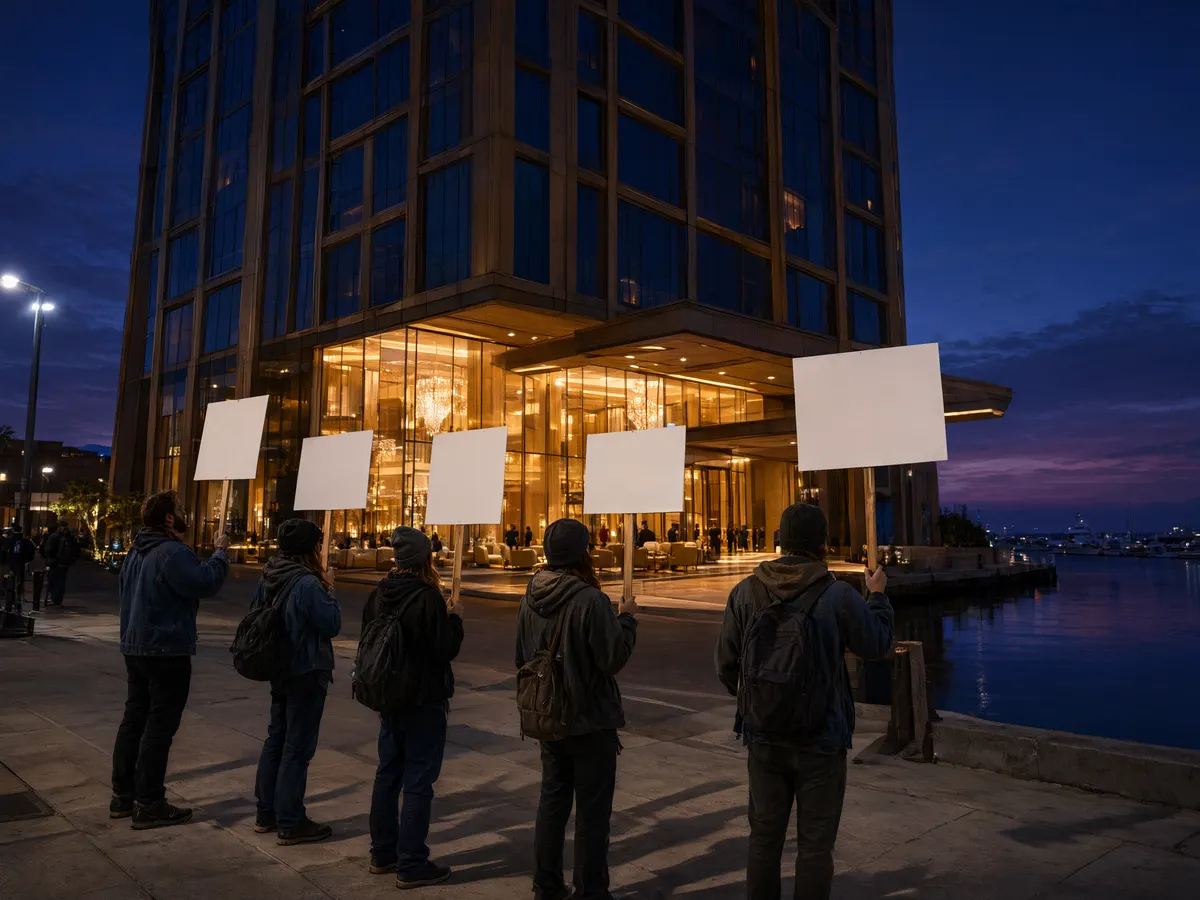
More than 1,300 workers at Encore Boston Harbor walked out on a Friday after contract talks with owner Wynn Resorts broke down, according to reporting by CDC Gaming. The property stayed open. Wynn said in a statement that it “remains open and operational” and stands ready to serve guests while negotiations continue. In practice, a US casino strike almost never means a dark gaming floor. Licensed casinos are capital-heavy, heavily regulated operations with management, salaried staff, and temporary workers available to keep core functions running. What a strike changes is the texture of the place: which desks are staffed, how long the valet line is, whether the call center picks up, how fast a cage transaction moves.
That gap between “closed” and “running thin” is where the whole story lives.
Who actually walked out, and which jobs are they?
The strikers belong to two unions: UNITE HERE Local 26 and Teamsters Local 25. They voted in August to authorize a strike, their contract with Wynn Resorts expired on August 31, and no replacement deal had been reached when the walkout began.
The Teamsters portion is small but sits in unusually visible spots. The 211 Local 25 members on strike work in:
- Warehouse and receiving
- Horticulture (the floral and plant displays Encore is known for)
- The call center
- Cage cashiers
- Limo drivers, dispatchers, and traffic attendants
- Valet
- Guest experience attendants
Read that list again from a player’s point of view. Cage cashiers handle chips and cash. Valet and traffic attendants handle your arrival. The call center handles your reservation problem. Guest experience attendants are the people you ask where anything is. These are not back-of-house roles you’d never notice; they are the touchpoints that shape whether a visit feels smooth or frustrating. The larger UNITE HERE Local 26 contingent covers hospitality work of the kind that keeps hotel rooms and food service moving.
“We didn’t want to strike, but we won’t accept a contract that blatantly disrespects our labor,” said James Atkins, a lead gardener and chief steward at Local 25. “We’re on the picket line and will stay out as long as it takes to get a fair deal.”
What are the two sides actually arguing about?
The unions want better wages, stronger benefits, and enhanced job protections, and they are framing the ask against the property’s scale: an estimated $847 million in revenue last year, per the unions’ statement. Teamsters Local 25 president Thomas Mari accused management of slow-walking negotiations and said the company refused to return to the bargaining table with meaningful improvements even after the strike-authorization vote.
Wynn’s framing is about sustainability rather than capacity. The company said the unions “have chosen to initiate a strike despite our continued efforts to reach an agreement” and that it is committed to a deal that is “fair, financially sustainable, and protects jobs for the long term.” Encore’s own figures put average compensation and benefits for union-represented employees above $95,000 a year.
The most revealing numbers are the two growth rates each side leans on, because they are not in dispute so much as in tension:
| Figure | Value | Whose point it supports |
|---|---|---|
| Estimated property revenue, last year | $847 million (per the unions) | Union: there is money to share |
| Union wages and benefits growth, past four years | +36.8% | Company: costs already rose sharply |
| Revenue growth, same period | +1.9% | Company: the top line did not keep pace |
| Average union compensation and benefits | Over $95,000/year | Company: pay is competitive |
| Voluntary turnover | 3.9% | Company: staff are staying |
Encore also cites internal survey results: 86% of union employees say they are proud to work there and 83% plan to stay. Those are the company’s figures, and they are doing a specific job in the argument, which is to answer the claim that conditions are untenable. Unions typically respond that pride in the work and satisfaction with the contract are different questions. Both can be true at once.
Why is the timing awkward for the property?
Because the trading numbers have softened slightly. Wynn reported second-quarter operating revenue from Encore Boston Harbor of $209.3 million, down $6.4 million from $215.7 million in the same quarter a year earlier.
Part of that swing is table games hold, which is worth understanding if you follow casino results. Table games win percentage, the share of money wagered that the house actually keeps in a given period, came in at 18.1% for the quarter. That is inside the property’s expected range of 18% to 22%, but below the 21.3% recorded a year earlier. Hold percentage bounces around quarter to quarter because of short-run variance in real play; it is not the same thing as the house edge built into each game, which never changes. A quarter with low hold can make a property look weaker than its underlying volumes suggest, and a quarter with high hold can flatter it.
So the company is bargaining while its most recent reported quarter is down, and the union is bargaining against an $847 million annual revenue figure. Neither framing is dishonest. They are just measuring different things over different windows, which is a very normal reason for talks to stall.
What changes on the floor for a guest?
Expect friction rather than closure. Based on the roles involved, the practical effects of a casino workers strike at a property like this typically show up as:
- Arrival and parking. Valet is among the struck classifications, so self-park and longer queues are the realistic outcome.
- Cage service. With cage cashiers on the picket line, chip and cash transactions can slow at peak hours. Ticket-in, ticket-out kiosks and card play absorb some of that.
- Phone and reservations. A struck call center means slower response times; online channels usually hold up better.
- Hotel and food service. Reduced housekeeping frequency, trimmed hours, or closed outlets are common during hospitality walkouts.
- The picket line itself. Noise, signage, and crowds at entrances are part of the experience while the dispute runs. Some travellers choose not to cross a picket line on principle, which is a personal call.
What does not change: the games. Slot outcomes are produced by a random number generator, and the RTP and house edge on every machine and table game are the same during a strike as they were the week before. There is no staffing-related edge to find, no “looser” floor because the operator wants your business. If you do play, set a budget before you arrive and treat it as entertainment spend, not a way to make money, strike or no strike.
How long do disputes like this usually last?
Honestly, nobody can tell you, and anyone who gives you a confident number is guessing. Casino strikes have historically run anywhere from a single shift to many weeks, and the length depends on things that are not visible from outside: how far apart the wage proposals are, whether a mediator gets involved, how much strike-fund support the locals can sustain, and how badly the walkout bites into revenue during a strong booking period.
What usually breaks the deadlock is one side recalculating the cost of waiting. For the company, that cost is measured in disrupted guest experience and lost table and hotel revenue in a quarter that was already down year on year. For the workers, it is weeks without a paycheque. Local 25’s Mari put the union’s calculation bluntly: “When a company refuses to respect the workers who make its profits possible, we shut it down.”
Why does a single Boston property matter to the wider industry?
Because Encore Boston Harbor is one of a small number of large, unionised commercial casinos in a tightly licensed market, and contracts in that world tend to set reference points. UNITE HERE is the dominant hospitality union across major US casino markets, and when one local lands a wage and benefits package, other locals cite it at their own bargaining tables. The Teamsters’ involvement here also shows how broad the bargaining unit can be at an integrated resort, covering everything from the warehouse to the limo fleet.
There is a second, quieter signal in those two growth rates. Labour costs rising 36.8% over four years against 1.9% revenue growth is the shape of the squeeze a lot of regional US operators describe: post-pandemic wage inflation landing on top-line figures that have largely plateaued. Massachusetts casino labor talks are not happening in isolation from that, and neither are the ones coming up elsewhere.
If you have a trip booked, check the property’s own channels for current hours and outlet closures before you travel rather than relying on third-party listings, which lag. And if you are watching this as an industry story, the number to track is not the picket-line rhetoric. It is whether the parties get back to the table, and what the wage figure looks like when they do.