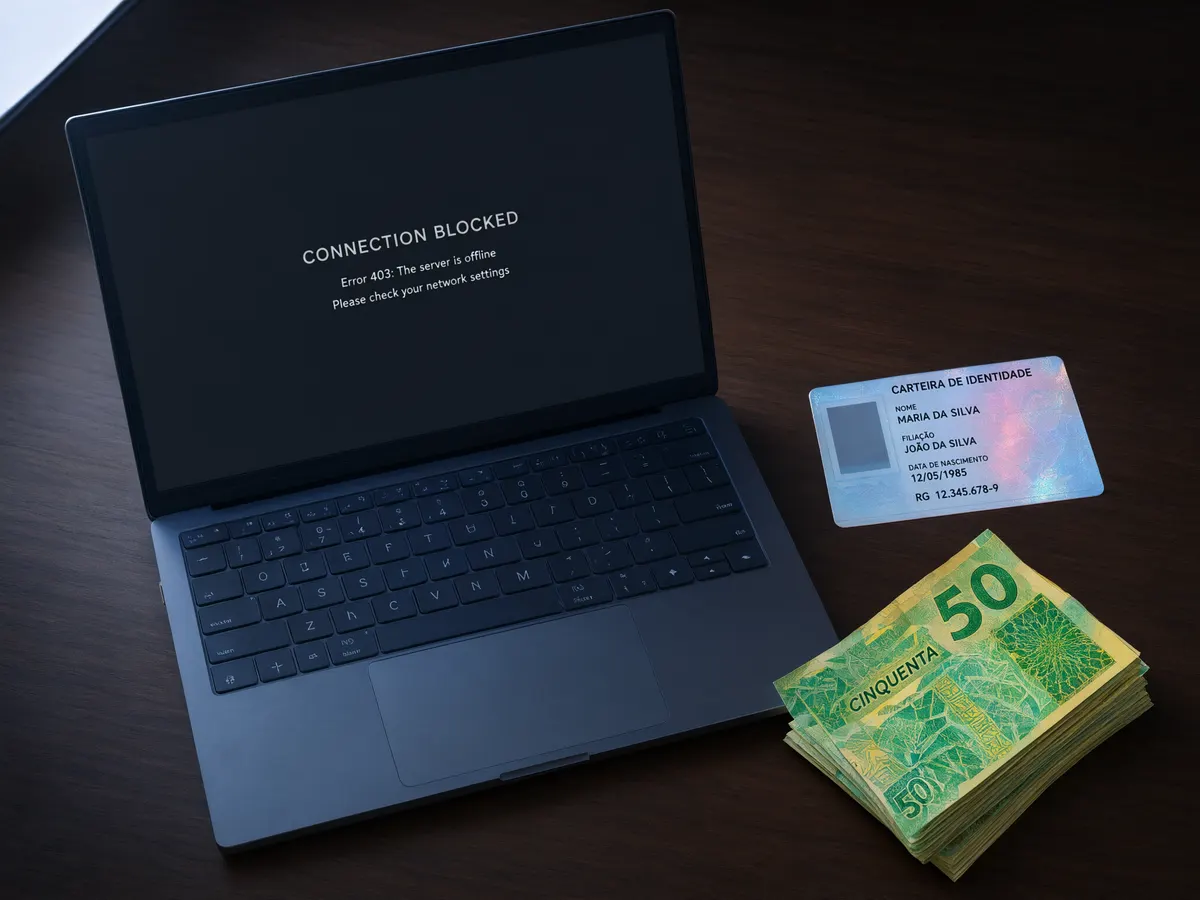
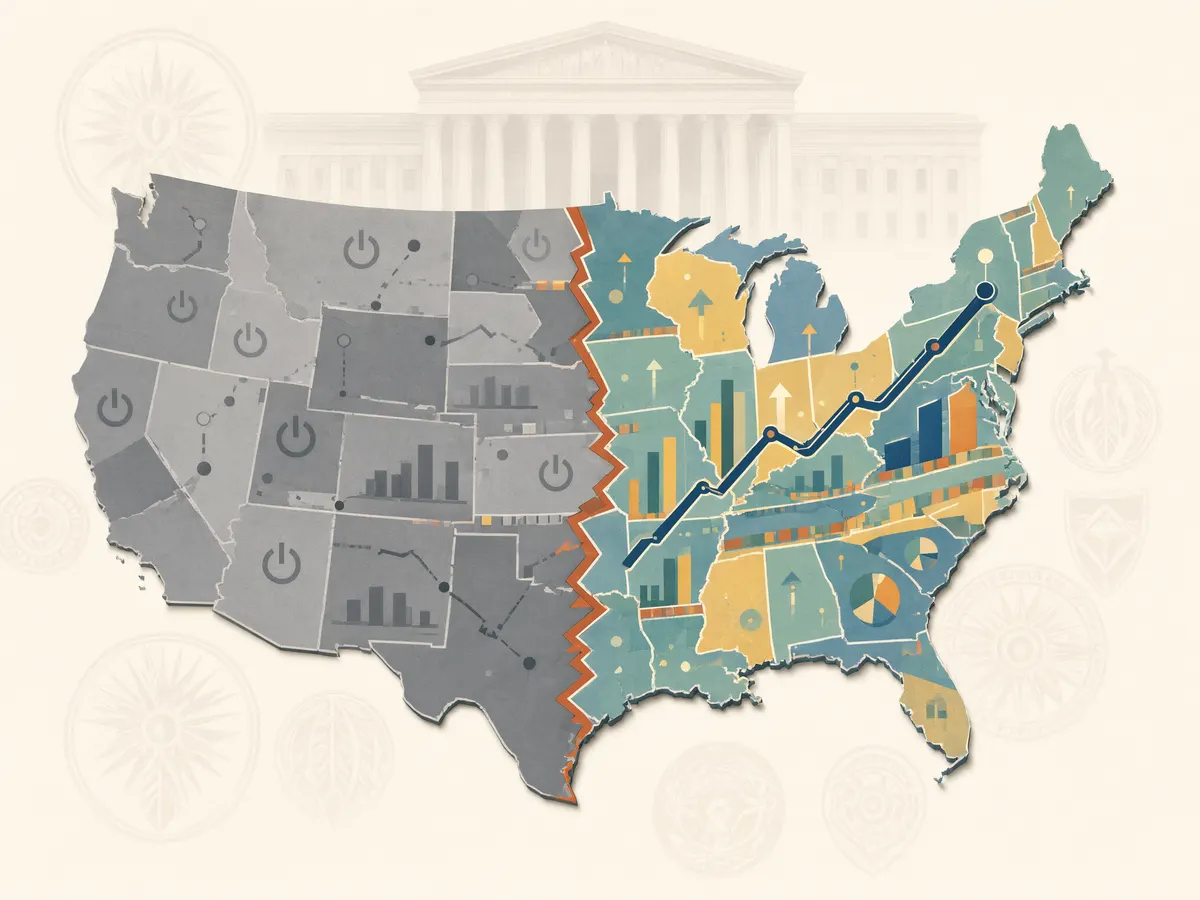
A Michigan trader who had been buying sports event contracts through Coinbase opened the app and found that door shut. In the same stretch of days, four tribes in Oklahoma and northern California announced they are preparing to open a similar door under their own brands, with Kalshi supplying the plumbing. Same product category, two opposite directions, one week apart.
That split is the whole story of US prediction markets right now. The Kalshi tribal partnership news and Coinbase’s retreat from Michigan are not contradictory signals, they are the two halves of a patchwork that is being drawn in real time by courts, state regulators and federal commodities law. If you trade event contracts, or you work in gambling and need to know who your competitors will be next quarter, the practical question is no longer “is this legal?” but “legal under whose rules, and who is currently contesting it?”
What the tribal partnerships actually involve
Four Native American tribes have agreed to launch prediction-market apps with Kalshi. The structure matters more than the number: each tribe owns the customer-facing platform, controlling branding, marketing and the customer relationship, while Kalshi provides the trading infrastructure and the liquidity behind it.
That is close to the inverse of a conventional white-label gaming deal, where the operator owns the customer and the supplier stays invisible. Here the tribe is the brand and the exchange is the engine.
| Tribe or nation | Location | Role in the deal |
|---|---|---|
| Alabama-Quassarte Tribal Town | Oklahoma | Owns its own customer-facing prediction-market app |
| Greenville Rancheria | California | Owns its own customer-facing prediction-market app |
| Kletsel Dehe Wintun Nation | California | Owns its own customer-facing prediction-market app |
| Alturas Indian Rancheria | California | Owns its own customer-facing prediction-market app |
These agreements follow a partnership Kalshi announced in September with a Louisiana tribe, so this is a pattern rather than a one-off experiment. Four deals in a single announcement, after one in the previous month, reads like a template that has been tested and is now being repeated.
How to work out which rulebook applies to you
Event contracts are confusing because three different legal systems can touch the same screen. Work through it in this order:
- Identify the venue, not the app. A branded app may route orders to a federally regulated exchange. Kalshi operates as a designated contract market under the Commodity Futures Trading Commission, and that federal designation is the basis of its argument that state gambling law does not govern its contracts. The brand on the icon tells you very little.
- Check whether a state regulator has objected. Several have issued cease-and-desist orders or sued. Coinbase agreeing to halt sports event contracts in Michigan is what that pressure looks like when an operator decides the fight is not worth it.
- Check who is on the other side of the litigation. Kalshi won a ruling in New Jersey, and 39 states plus Washington, D.C. are now urging the Supreme Court to review it. When nearly four-fifths of US states line up on one petition, the question is unresolved by any honest reading.
- Ask what happens if something goes wrong. A state-licensed sportsbook sits under a state regulator with a complaints process, mandatory self-exclusion registers and advertising rules. A federally regulated exchange sits under a different framework with different remedies. Neither is automatically better, but they are not interchangeable, and you should know which one you are in before you fund an account.
Why tribal gaming is split down the middle
Many tribal gaming organisations are suing Kalshi over its sports-event contracts. That is the context that makes four tribes signing with the company notable, and three of them are in California, the single biggest tribal gaming market in the country.
The logic on each side is straightforward once you separate the two interests at play. Tribes that run large casinos built on exclusivity negotiated through state compacts see event contracts as an unlicensed sportsbook arriving without the revenue sharing, the capital spend or the compact obligations. Every contract traded on a football game is, from that seat, a bet their compact was supposed to protect.
Tribes on the other side of the argument tend to be smaller, with less gaming revenue to defend and limited routes into online markets. A partnership that hands them the brand, the marketing and the customer relationship, with someone else carrying the technology and liquidity cost, is a digital distribution channel they could not build alone. Sovereignty cuts both ways here: it lets a coalition sue, and it lets an individual nation sign.
Worth keeping straight: nothing about these deals resolves the underlying legal question. A tribal partner does not convert a contested federal product into a compacted Class III gaming operation, and a lawsuit from one tribe does not bind another. The deals widen distribution while the law catches up, which is exactly why they irritate the other camp.
What Coinbase’s retreat tells you
Coinbase agreeing to stop offering sports event contracts in Michigan is the more revealing of the two stories, because it shows the cost of the strategy rather than the upside.
A company with Coinbase’s balance sheet and legal budget decided that one state’s objection was not worth defending. For a listed business with licences and banking relationships across dozens of regulated activities, an adverse gambling finding is a reputational and compliance problem well beyond the revenue of sports contracts in a single state. Kalshi, whose entire business is event contracts, has no such calculation to make.
So expect divergence to continue. Firms with something else to lose will withdraw state by state. Pure-play exchanges will keep expanding and keep litigating, because retreat is existential for them in a way it is not for a crypto platform.
The three things that will settle this
First, whether the Supreme Court takes the New Jersey case. A grant of review would freeze a lot of commercial planning; a refusal would leave the current patchwork standing and encourage more launches on the federal theory.
Second, political scrutiny. Senator Richard Blumenthal plans to widen his inquiry into how operators handle VIP customers, and that line of questioning does not stop neatly at the boundary between a sportsbook and an exchange. If high-spend customer treatment becomes a congressional theme, event-contract platforms will be asked the same questions.
Third, money. Macquarie is forecasting mixed third-quarter results across gaming, and soft numbers sharpen the incumbents’ incentive to keep funding litigation. Operators losing share to products they cannot legally match do not stay quiet.
For anyone actually trading these contracts, the practical advice is unglamorous. Know which regulator stands behind the platform you are using, assume the rules in your state could change with a court ruling rather than a press release, and treat the price of a contract as an implied probability that includes the platform’s own margin, not a forecast you are getting for free. Set a loss limit before you start, use whatever deposit and session controls the platform offers, and if the activity stops feeling like a decision and starts feeling like a compulsion, step away and contact a problem gambling helpline. The regulatory map will keep moving. Your bankroll will not reset with it.
Reporting context drawn from Gambling Insider’s coverage of the tribal partnerships and the Michigan withdrawal.