
187 sites switched off, R$1.325bn left behind
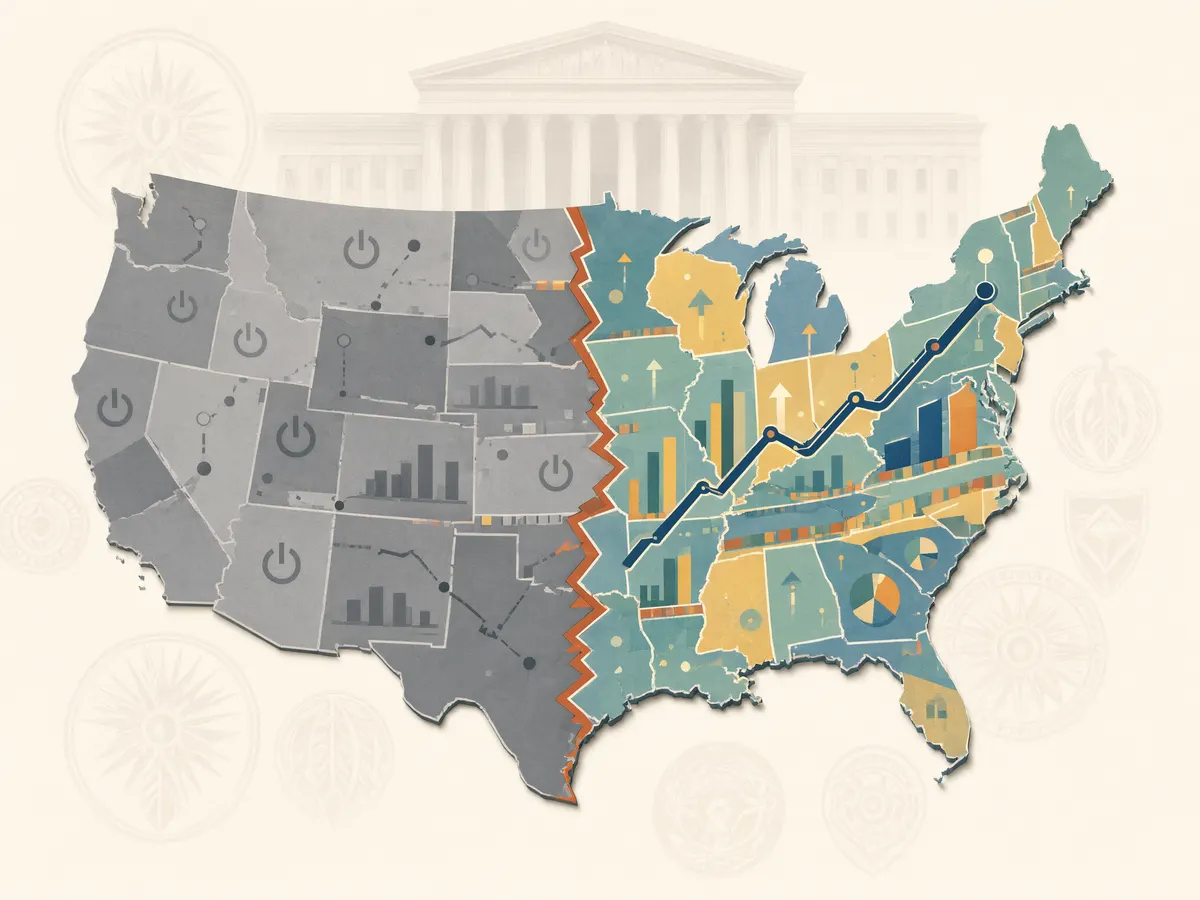
Divide R$1.325bn by 26.5 million people and you get exactly R$50 each. That is the arithmetic of the Brazil betting site shutdown: of the 188 betting websites that held government authorisation, the Ministry of Justice and Public Security found only one still running after the deadline passed, and the balances sitting in those closed accounts add up to R$1.325bn spread across roughly 26.5 million bettors.
Fifty reais is not a life-changing sum. Multiplied by 26.5 million accounts, it becomes one of the largest player-fund repayment exercises any regulated betting market has had to run. And it happened not because operators collapsed, but because the state closed a market it had licensed itself.
The ministry’s statement, issued on 6 October, put it plainly: among the 188 sites that operated with authorisation until that Monday, the federal government identified a single holdout. Blocking had already been requested, with enforcement authorities monitoring compliance. In other words, the shutdown of a national licensed market was effectively complete within days.
What actually turned the lights off
The instrument was Provisional Measure No. 1,394/2026, which prohibits the operation, offering, intermediation and advertising of fixed-odds betting in Brazil. Everything that followed, including the withdrawal window and the shutdown sequence, ran to the timetable that measure established.
A provisional measure is worth understanding if you follow Brazil online gambling regulation, because it explains the speed. It is an executive act with immediate legal force, and Congress has to vote to confirm it before it becomes permanent law. Nothing about it needs years of parliamentary debate to bite. Operators holding valid authorisations one week were prohibited the next, which is why licensed betting sites Brazil had spent 2025 onboarding customers into went dark more or less simultaneously.
That is the part the industry is still absorbing. The regulated regime created by Brazil’s 2023 fixed-odds betting law was built on the assumption that a licence is a durable asset: you pay the fee, you meet the technical and payment rules, you advertise, you build a customer base. The ban demonstrated that an authorisation granted by the executive can be suspended by the executive. Betting operator compliance, in this case, meant complying with an order to stop trading.
How the refund machinery is meant to work
Players were given a voluntary window first. The deadline for customers to withdraw their own balances expired at 11:59pm on 5 October. Anything left in an account after that passes into the administrative process rather than a normal cashout.
From there, the mechanism runs through the banking system rather than through the betting sites. Operators were given until 7 October to hand financial institutions each customer’s remaining balance, identified by their CPF taxpayer number. The CPF is the hinge of the whole thing: it is the identifier that lets a bank match a leftover betting balance to a real person with a real account, without the player having to log back into a site that no longer exists.
| Date | What it covered |
|---|---|
| Until 11:59pm, 5 October | Voluntary window for customers to withdraw their own balances directly |
| 6 October | Ministry of Justice statement: only one of 188 authorised sites still operating; blocking requested |
| 7 October | Deadline for operators to report each customer’s remaining balance to financial institutions, keyed to CPF |
Two things to be clear-eyed about. First, the reported figure of R$1.325bn is what the government says is still awaiting repayment, not money that has already landed in anyone’s account. Second, handing a balance file to a bank is a data transfer, not a payment confirmation. Players waiting on player fund refunds should treat official ministry and banking channels as the only reliable source on timing, and ignore anyone on social media claiming to know better.
Where this gets awkward for players
An exercise this large has predictable failure points, and most of them land on the customer rather than the operator.
- Mismatched identity data. If the name, CPF or bank details attached to a betting account were wrong, outdated, or belonged to someone else, a CPF-matched refund has nothing clean to attach to. Accounts opened casually years into a KYC-light habit are the ones most likely to stall.
- Dormant and forgotten accounts. At R$50 average, a large share of that R$1.325bn is small change sitting in accounts people stopped using. Those are precisely the balances nobody withdrew before the 5 October cutoff.
- Refund phishing. Any mass repayment event attracts messages offering to “release” your balance in exchange for a fee, a password, or a code. Legitimate repayment keyed to your CPF does not require you to pay anything or hand over account credentials.
- The offshore drift. When a licensed market closes, unlicensed sites market aggressively into the gap. They sit outside the regulator’s reach entirely, which means there is no ministry timetable and no banking mechanism if they decide to keep your balance.
If you hold a balance caught up in this, the useful housekeeping is unglamorous: screenshot your account balance and transaction history while you still have any record, confirm the CPF and bank details you registered actually match your own documents, keep deposit receipts, and watch official announcements rather than forum rumours.
The lesson sitting underneath the numbers
Gambling regulatory enforcement usually arrives as a fine, a licence condition, or a blocked domain for one bad operator. This was different in scale: an entire authorised market taken offline on a published timetable, with the state then acting as traffic controller for the money left inside it.
The transferable point for anyone who bets anywhere, under any regulator, is that a balance on a betting site is a credit with a company, not cash in a bank. It depends on that company existing, holding a valid authorisation, and being permitted to pay you. Brazil’s 26.5 million bettors did not lose access to R$1.325bn because operators ran out of money. They lost access because the legal basis for the account disappeared overnight, and the only route back to the money now runs through a government timetable and a taxpayer number.
Which makes the dullest habit in gambling the most valuable one: withdraw what you are not actively using, and keep only what you intend to bet. If you ever find yourself unable to do that comfortably, the deposit limits, cool-off and self-exclusion tools on any licensed site are there for exactly that reason, and support services for gambling harm are free to contact.