
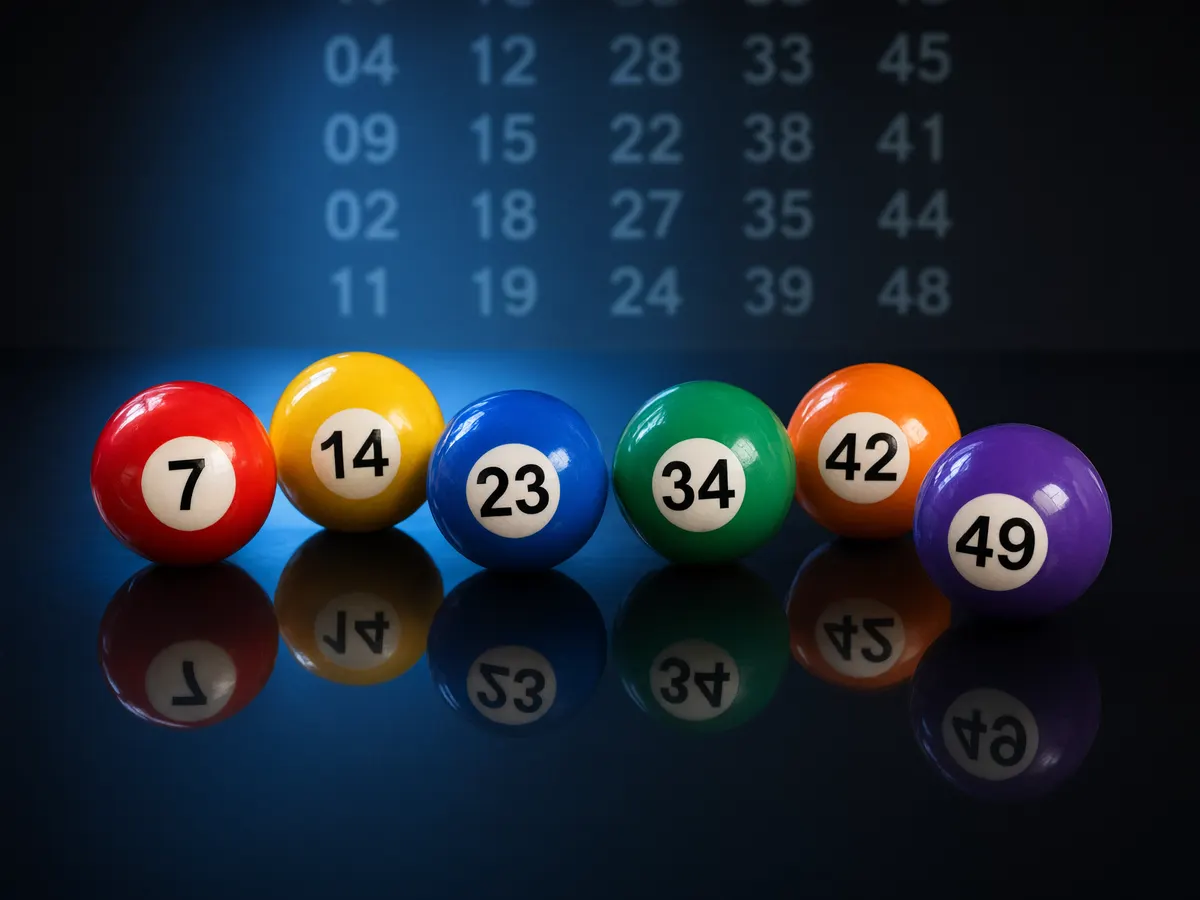
Ever wondered how a single person ends up winning on five lottery tickets in the same draw? That is exactly what happened with Emirates Draw EASY6 in August 2026, and the shape of the win tells you more about how number games are built than any explainer could on its own. One player, 11 tickets, five winners, every prize tier covered, and a $4 million grand prize at the top of the pile.
Let’s walk through the facts first, then take the game apart.
Did one player really win on five tickets in one draw?
Yes. Emirates Draw says Melvin Francis, a 26-year-old accountant originally from Kerala, India, bought 11 EASY6 tickets for the draw held on 21 August 2026. Five of those tickets won something, and between them they covered every prize tier the game offers, topped by the $4 million grand prize.
A few details worth holding onto:
- Emirates Draw describes him as the first player in its history to hit every EASY6 prize tier in a single draw, and the youngest of its nine grand prize winners to date.
- He started playing in June 2026, roughly two months before the win, after finding the operator through social media interviews with earlier winners.
- He did not pick his own numbers. He used the game’s randomiser, the equivalent of a quick pick.
- He was first told about his five-number match, reported as $8,333. Emirates Draw’s own game page lists $25,000 for matching any five numbers, so the lower figure looks like a per-winner share rather than the standard fixed prize. The $4 million notification came on 26 August, five days after the draw, once checks were under way.
- The grand prize was credited only after security and identity verification were completed.
- He works with his father in the family business in the GCC, already holds a US CMA certification, is studying for an MBA, and says part of the money will fund his US CPA qualification: “I want to earn my US CPA qualification. I can now fund it myself rather than asking my father for support.” He also plans to invest in expanding the family business.
That is the story. The interesting part, for anyone trying to understand draw games rather than just admire a big lottery payout, is the structure that made a five-ticket result possible at all.
How does a pick-six draw game work?
EASY6 belongs to the oldest and simplest family of lottery formats: you choose six numbers from a fixed pool, the operator draws six, and you are paid according to how many of your numbers match. Match the lot and you take the grand prize. Match fewer and you drop into a lower tier with a smaller, usually fixed, amount attached.
Three things make this format tick:
- A closed pool of numbers. Every combination that can be drawn is known in advance, so the operator can calculate exactly how likely each outcome is and price the prizes accordingly.
- Tiered prizes. Matching three or four numbers happens far more often than matching six, so those tiers pay far less. The published $25,000 for five matches sitting under a $4 million top prize is a textbook example of that gradient.
- Independent draws. Each draw is its own event. Numbers that appeared last week are no more or less likely this week, and a randomiser-generated line has exactly the same chance as one built from birthdays.
That last point is the one people find hardest to accept, and it is also the reason the quick pick detail in this story is a nice teaching moment. The randomiser did not give him better numbers. It gave him numbers, and the draw happened to land.
Why did it take five tickets to cover five prize tiers?
Because in a standard pick-six game, one ticket pays out on one tier, the highest it qualifies for. A line that matches all six numbers is not also paid as a five-match and a four-match. So “every prize tier in a single draw” is not one magic ticket doing everything. It is five separate lines, each landing a different number of matches, from the lowest tier right up to the jackpot.
And that is less freakish than it sounds once you look at the odds gradient. Low tiers are the engine room of any lottery. They are designed to be hit reasonably often, because small, frequent wins are what keep a game feeling alive. With 11 lines in play, picking up two or three minor prizes is well within normal. The $4 million at the top is the part that was wildly improbable, not the clean sweep around it.
How long are the odds in a game like this?
The honest answer: very long, and you can calculate exactly how long with secondary school maths. The number of possible six-number combinations from a pool of n numbers is the combination formula C(n,6). Emirates Draw publishes its own EASY6 odds and prize structure, so check the game rules for the exact figures, but here is what the format does across common pool sizes so you can see the scale.
| Pool size (pick 6) | Possible combinations | Odds of matching all six on one line |
|---|---|---|
| 6 from 40 | 3,838,380 | 1 in 3,838,380 |
| 6 from 42 | 5,245,786 | 1 in 5,245,786 |
| 6 from 45 | 8,145,060 | 1 in 8,145,060 |
| 6 from 49 | 13,983,816 | 1 in 13,983,816 |
Notice how steeply the numbers climb. Adding nine numbers to the pool, from 40 up to 49, makes the jackpot roughly three and a half times harder to hit. That single lever is how operators set the size and frequency of their top prize: a bigger pool means rarer jackpots, which means the grand prize can be advertised at a bigger number.
Does buying 11 tickets actually move the needle?
It improves your chance in the most boring way possible: linearly. Eleven different lines in a 6-from-42 style game give you 11 chances out of 5,245,786, which is about 1 in 476,890. Better than one in five million. Still a number you would never plan around.
This is the bit I’d want a beginner to really sit with. Multiplying your tickets multiplies your stake at exactly the same rate it multiplies your chance, so your expected return per dollar does not improve at all. Lotteries, like every casino game, pay out less than they take in. The gap between ticket sales and prize money is the operator’s margin, the lottery equivalent of a house edge, and it is typically much wider than the house edge on casino table games or slots. Over time, the game keeps a share. No ticket volume, number pattern or draw-day ritual changes that arithmetic.
What the extra lines genuinely do is raise the chance of catching something in the lower tiers. That is the realistic outcome of buying multiple lines, and it is close to what happened here, with the headline prize arriving on top of it.
Do randomiser numbers beat numbers you choose yourself?
No. Every valid combination has identical probability, whether a machine generated it or you built it from anniversaries. There is no sequence the draw prefers.
Number choice can matter in one narrow situation: pari-mutuel games, where a prize pool is split among everyone who matches. There, picking unpopular numbers does not improve your odds of winning but does reduce the chance you share the pot. The amounts in this case are a useful illustration. Emirates Draw lists $25,000 as the prize for matching any five numbers, yet the figure reported for that tier in this win was $8,333, about a third of the published amount, which is what a prize shared between several winners of the same tier looks like. If you play any draw game, the rules page will tell you which model it uses, fixed or shared. It is worth two minutes of reading.
Why did the money take days to arrive?
The draw was on 21 August. The jackpot notification came on 26 August, and the prize was credited after security and identity verification were finished. That gap is standard and it is a feature, not a delay to be annoyed about.
Large payouts trigger identity checks, the same KYC logic that governs withdrawals at any licensed online operator: confirming the winner is who they say they are, that the account and ticket belong to them, and that the claim is clean. If you ever play a draw game with a real prize attached, register with accurate personal details from day one. Mismatched names and unverifiable documents are the single most common reason a legitimate payout stalls.
Tax is the other practical layer. Lottery and gaming winnings are treated differently depending on where the game is licensed and where the winner is resident, and in India, for example, winnings of this type are taxable with tax deducted at source. Treat that as general information rather than advice. Anyone holding a prize of this size should be speaking to a qualified tax professional in the relevant jurisdiction, not to a forum thread.
What a smart beginner should actually take from this
Stories like this one are marketing as much as they are news, and that is fine as long as you read them with the maths in your head. Nine grand prize winners in the operator’s history, against however many millions of tickets sold, is the real context for the $4 million headline.
So here is the useful version. Pick-six games are fully transparent systems: you can calculate the odds yourself, the tier structure tells you where the realistic outcomes sit, and the randomiser is neither a shortcut nor a handicap. What you cannot do is tilt the expected value in your favour. The sensible way to play a lottery jackpot game is with money you have already decided you can lose, with a budget you set before you buy and do not top up after a near miss.
If playing ever stops feeling like entertainment, use the deposit and spend limits your operator offers, or take a cool-off period. Support services for gambling harm are available in most jurisdictions, and reaching out early is far easier than reaching out late.