The press release was dated October 7, 2026, and it was short: BetMGM had been voted, in a tie with DraftKings and FanDuel, the Most Trusted Online Casino Brand in the 2026 BrandSpark American Trust Study, the survey behind the BrandSpark Most Trusted Awards, which was announced via the BrandSpark Most Trusted Awards and covered alongside Newsweek’s Most Trusted Brands rankings. A CEO quote followed, as CEO quotes do. And then the more interesting question, which nobody in a press release ever asks: trusted by whom, measured how, and does any of it tell a player whether their withdrawal will actually arrive?
What BetMGM actually won
The award is a consumer perception prize. BrandSpark’s 2026 American Trust Study surveyed more than 35,000 US consumers and measured trust across hundreds of brands and categories, with online casino as one of them. BetMGM came out on top of its category, sharing the title with DraftKings and FanDuel. No testing lab was involved, no regulator signed off on it, and no payout audit was published alongside it.
That is not a knock on the result. A survey of 35,000 people is a serious sample, far larger than the “voted best by our readers” polls that circulate in this industry, and category-level trust scores across hundreds of brands give it some comparative weight. It tells you something real: among Americans who have an opinion about online casino brands, BetMGM’s name carries the least suspicion, alongside two other regulated operators. In a sector where plenty of players still assume every site is rigged, that is worth having.
Adam Greenblatt, BetMGM’s chief executive, framed it the way you would expect: “In an industry where fairness and security are top of mind for our players, trust is the foundation of everything we do.” He pointed to the game portfolio, responsible gambling tools, platform security and the standards of the regulated market. All sensible things to point at. The award itself measures none of them directly.
Does winning a trust award mean the games are fairer?
No. And it is worth being blunt about that, because the two things get conflated constantly.
Game fairness is a mathematical and technical property. A slot’s RTP (return to player) is the share of all wagers the game returns over the very long run, typically around 95 to 98 percent on online slots, while physical machines in land-based venues often sit closer to 88 to 94 percent; the remainder is the house edge, which is simply 100 percent minus the RTP. A 96 percent RTP game has a 4 percent house edge, and that edge is why the operator makes money whether or not it wins awards. Outcomes come from an RNG, which makes each round independent of the last, so there are no hot or cold machines and no sequence that is “due”.
None of that changes based on brand reputation. What reputation does change is the probability that the RTP figure in the game info panel is the real one, that the RNG has been tested by an independent lab, and that the money you win is paid out without a sudden reinterpretation of the terms. Trust is not about the odds. It is about whether the published odds and published rules are the ones actually in force.
What makes an online casino credible, concretely
The signals that matter are mostly boring, checkable and have nothing to do with marketing. Here is what I look for, and where to find it.
| Trust signal | What it proves | Where to check |
|---|---|---|
| Licence from the regulator in your jurisdiction | A real authority can fine, suspend or revoke the operator, and handle your complaint | Site footer licence number, verified on the regulator’s own public register |
| Independent RNG and game testing | Game outcomes and RTP have been examined by a third party, not just claimed | Certification marks from testing labs such as GLI, eCOGRA or BMM Testlabs |
| Published RTP per game | You can see the house edge before you stake anything | In-game info or paytable screen |
| Clear withdrawal terms | Processing times, limits and fees are set in advance rather than improvised | Banking or cashier terms page |
| KYC done properly | Identity checks happen before you are waiting on a payout, not after | Account verification section at signup |
| Honest bonus terms | Wagering requirements, game weighting and max cashout are stated plainly | Full bonus T&Cs, not the promo banner |
| Working responsible gambling tools | Deposit, loss and session limits, cool-off and self-exclusion are live features | Account settings, before you deposit |
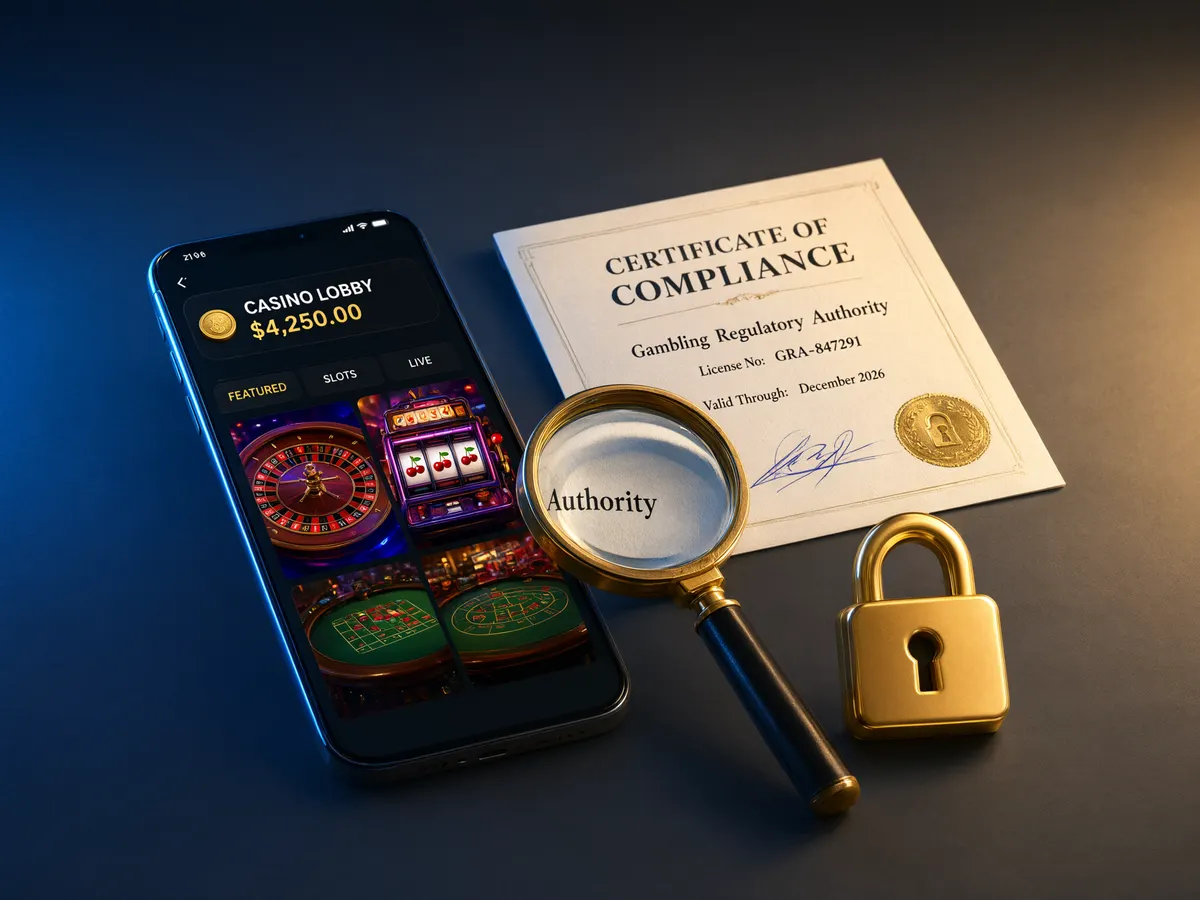
Licensing is the load-bearing one. In the United States, online casino play is licensed state by state, which means an operator like BetMGM answers to the specific gaming regulator in each state where it runs. That is the practical difference between a regulated site and an offshore one: with a licensed operator, a dispute has an address. With an unlicensed site, your recourse is a support ticket and hope.
The bonus terms deserve a special mention because they are where most “untrustworthy” feelings actually originate, and they are almost always disclosed. A 30x wagering requirement on a $100 bonus means $3,000 of turnover before withdrawal. Slots usually contribute 100 percent towards that, table games far less, so the same requirement clears at wildly different speeds depending on what you play. Add a max bet cap while the bonus is active and a max cashout ceiling and you have the full picture. A trustworthy operator writes all of this in a place you can find in under a minute. A sly one makes you dig.
Why brand reputation matters more than it should
Here is the uncomfortable context behind an award like this. The regulated US market competes not just with other licensed casinos but with offshore sites that offer bigger bonuses, no verification and no consumer protection. Many players cannot tell the difference between the two from the homepage, because the homepages look identical. Both have slots, both have live dealer tables, both have a welcome offer in a yellow box.
So reputation becomes a proxy. Players who do not know how to read a licence number fall back on whether they recognise the name. That is why a brand built on a land-based casino company carries an advantage it did not strictly earn online, and why consumer trust surveys end up functioning as a rough sorting mechanism for the regulated market as a whole. BetMGM benefits from it. So, indirectly, does any operator playing by the same rules.
The risk is that the proxy gets treated as the proof. Familiarity is not fairness. A name you have seen on a baseball broadcast is not an audit.
How to vet a site yourself in about five minutes
- Find the licence number in the footer, then look it up on the regulator’s own register. If the number does not appear there, stop.
- Open the banking terms and read the withdrawal section before you deposit. Note the processing window, any fees and the minimum and maximum amounts.
- Complete identity verification immediately. Doing KYC on day one removes the single most common cause of delayed payouts.
- Open any game you plan to play and check the stated RTP in the info panel. If a site does not publish RTP figures at all, that is information too.
- Read the full bonus terms, specifically the wagering multiplier, game weighting, max bet and max cashout. Then decide whether the offer is worth the restrictions.
- Set a deposit limit in account settings. If the tool is hard to find or does not exist, the operator’s responsible gambling commitment is decorative.
The part the award cannot tell you
A trust survey measures what 35,000 people felt about a logo. Useful as a signal of where the regulated market stands in public opinion, useless as a substitute for checking a licence, reading the withdrawal terms and understanding that the house edge applies to the most trusted online casino exactly as it applies to the least.
Every game on every licensed site is built to return less than it takes over time. That is not a scandal, it is the business model, and the honest operators say so. Treat the money you stake as the cost of entertainment, set your limits before you play rather than after a bad run, and use the cool-off and self-exclusion tools if the fun stops. If gambling has stopped being a choice, free confidential help is available through the National Council on Problem Gambling’s National Problem Gambling Helpline, whose primary number is now 1-800-MY-RESET; the older 1-800-522-4700 line remains available for text and chat. That is a more reliable trust signal than any award.