The federal shield everyone assumed covers event contracts does not cover your license
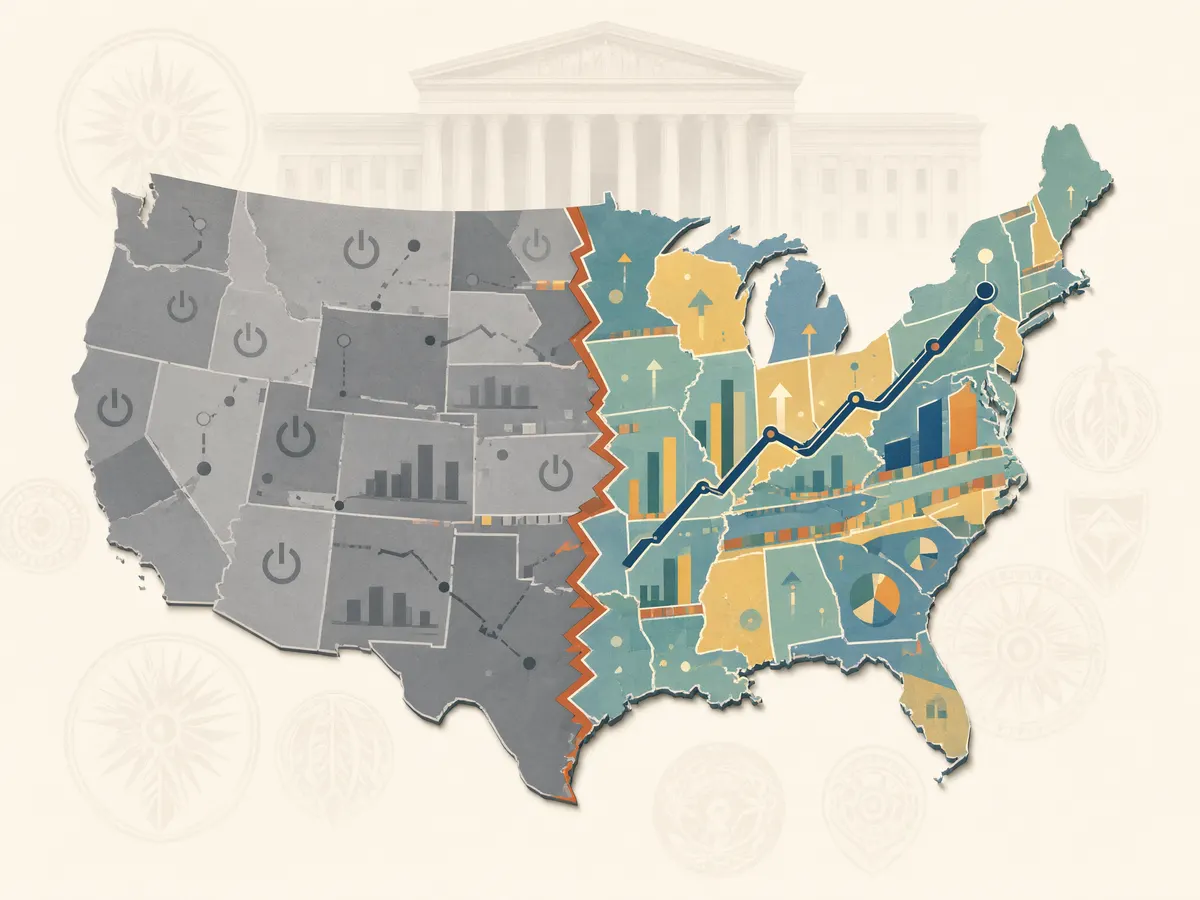
Ohio prediction market regulation has stopped being an argument about whether sports event contracts are legal and become an argument about who holds a state license. In an October 20 letter reported by Gambling Insider, the Ohio Casino Control Commission told licensed operators and suppliers that involvement with prediction-market companies operating in the state without a sports gaming license could put their own licenses at risk, up to and including revocation.
That is the part worth sitting with. The commission does not need to win a jurisdictional fight with a federally regulated exchange to make life difficult. It only needs leverage over the counterparties, and in Ohio it has plenty.
What the Ohio Casino Control Commission told its licensees
The OCCC warned licensed operators and suppliers that involvement in prediction markets could result in denial, nonrenewal, suspension or revocation of a license. According to the Gambling Insider report, the October 20 letter said the commission was “deeply concerned” by reports that some licensees were continuing to provide services to companies offering sports event contracts in Ohio without a state sports gaming license.
The language the regulator reached for matters more than the tone. The letter framed the problem as “the continued facilitation or support of illegal gambling activity, or the affiliation with illegal operators” by a licensee. Facilitation and affiliation are suitability words. They describe conduct the commission can act on without ever adjudicating whether an event contract is a bet.
The notice did not arrive out of nowhere. It followed the expiration of a cease-and-desist deadline the commission had set for 10 prediction market companies. Step one was aimed at the platforms. Step two, once that deadline passed, was aimed at everybody in Ohio who does business with them.
Event contracts, in plain terms
A prediction market is a venue where people buy and sell contracts that pay out a fixed amount if a stated event happens and nothing if it does not. Price doubles as implied probability: a contract trading at 60 cents on a dollar payout implies roughly a 60% market-assessed chance. Sports event contracts apply that structure to game outcomes.
How prediction markets differ from regulated sports betting
The economic experience for the customer is close to identical. The legal plumbing is not. A licensed Ohio sportsbook operates under state gaming law, holds a state license, submits its markets and systems for approval, and answers to the OCCC. An exchange-traded event contract is offered under the federal commodities framework, with CFTC oversight of the designated contract market, and no state gaming license in the picture at all.
| Element | Licensed Ohio sports betting | Sports event contracts |
|---|---|---|
| Legal basis | State gaming statute | Federal commodities framework |
| Primary regulator | Ohio Casino Control Commission | CFTC-regulated exchange structure |
| State license required | Yes | Not held |
| Market approval | Reviewed by the state regulator | Listed through the exchange |
| State consumer rules | Self-exclusion, advertising and responsible-gambling conditions apply | Outside the state framework |
| Enforcement route against a licensee | Direct, via the license | Indirect, via counterparties and affiliates |
That last row is the whole dispute in miniature. Regulators dislike the blurred line not because the product is novel, but because a customer in Columbus cannot tell which set of protections they are standing inside. One version carries state-mandated self-exclusion and advertising limits; the other does not.
Where FanDuel’s VIP prediction-market trial sits in the picture
In its Sept. 24 response to lawmakers, FanDuel’s Fox denied having a VIP program for FanDuel Predicts, writing that “At this time, FanDuel does not have a VIP program for FanDuel Predicts,” while the operator has separately begun testing a VIP prediction-market trial amid ongoing congressional scrutiny. The reporting places these developments alongside Ohio’s letter; it does not state that the trial prompted the OCCC notice, and nothing here should be read as a finding that any operator broke the law.
The detail available is thin, and I am not going to stretch it. What it does illustrate is the timing problem. Operators are building prediction-market propositions for their highest-value segments while two sets of authorities, federal lawmakers on one side and state gaming regulators on the other, are visibly unsettled about the category. A VIP program is exactly where that collision gets expensive, because VIP activity is the part of the book regulators already read most closely.
Why a relationship, not a product, is the licensing exposure
State gaming licenses are conditioned on continuing suitability, and suitability covers who you do business with. Most frameworks require licensees to remain of good character and integrity, to avoid participating in or facilitating unapproved gambling activity, and to disclose material affiliations and agreements. Breach any of those and the regulator’s remedy is the license itself, not a court case about the product.
So a supplier that provides pricing, data, geolocation, payments or platform services to a prediction-market company operating in Ohio without a sports gaming license is not accused of taking illegal bets. It is accused of supporting someone the regulator considers to be doing so. Market access agreements, white-label arrangements, affiliate marketing and cross-promotion all land in the same bucket, and an undisclosed arrangement looks considerably worse than a disclosed one.
Here is where I would push back on the prevailing comfort. “Our counterparty is federally regulated, so we are fine” is an answer to a question the OCCC did not ask. The commission asked whether an Ohio licensee is affiliated with an operator it has already told to stop. A licensee can be entirely correct about federal law and still lose a renewal.
First mover, or the opening move
Ohio is among the earliest state gaming regulators to tie prediction-market relationships directly to casino and sports betting licensing risk, rather than confining itself to cease-and-desist orders against the platforms. Whether others follow is not confirmed, and I will not pretend otherwise.
What is observable is that the mechanism travels. Suitability, affiliation and unapproved-activity provisions look broadly similar across state licensing regimes, so any regulator inclined to act already owns the tool Ohio just used. For a multi-state licensee, that is the real arithmetic: one national commercial decision, replicated across every jurisdiction where a license file sits open.
What compliance teams can do before a similar letter lands
The practical response is an inventory, not a legal opinion. In rough order of urgency:
- Map every commercial relationship touching a prediction-market platform, including supplier contracts, data feeds, payments, affiliate deals and co-marketing.
- Check which of those counterparties hold a sports gaming license in each state where you are licensed, and which do not.
- Confirm what was disclosed to each regulator and when, since non-disclosure is often the cleaner violation to prove.
- Route any planned expansion into event contracts or adjacent products through regulatory counsel before commercial sign-off, not after.
- Track guidance from other state gaming regulators and log it, because a letter to the industry is notice whether or not it is addressed to you.
- Document the review itself, with dates and decisions, so the file shows a considered position rather than silence.
The trade-off has no clean resolution. Stay out of event contracts and you cede an adjacent, fast-moving product to competitors who carry no state licensing exposure in the states where you do. Participate, and you are betting your renewal on a legal question nobody has finally answered. I would take the slower route and stay out until the position clarifies, because the downside is asymmetric: a lost quarter of product revenue is recoverable, a suspended license in a core state is not. Reasonable people are deciding the other way, and they may yet be proved right.
What stays unresolved
The federal and state frameworks have not been reconciled, Ohio’s letter is a warning rather than an enforcement outcome, and no regulator has yet tested the affiliation theory to conclusion against a major licensee. Until one does, the only reliable guide is the paperwork each operator can produce about who it is working with and what it told its regulators. Worth tracking closely, not filing away.
Anyone using these products should treat them as a form of gambling regardless of the legal label, and use the deposit limits, cool-off periods and self-exclusion tools available to them.